2026/01/19
AI Agent Development: What Makes an Agent Production-Ready?
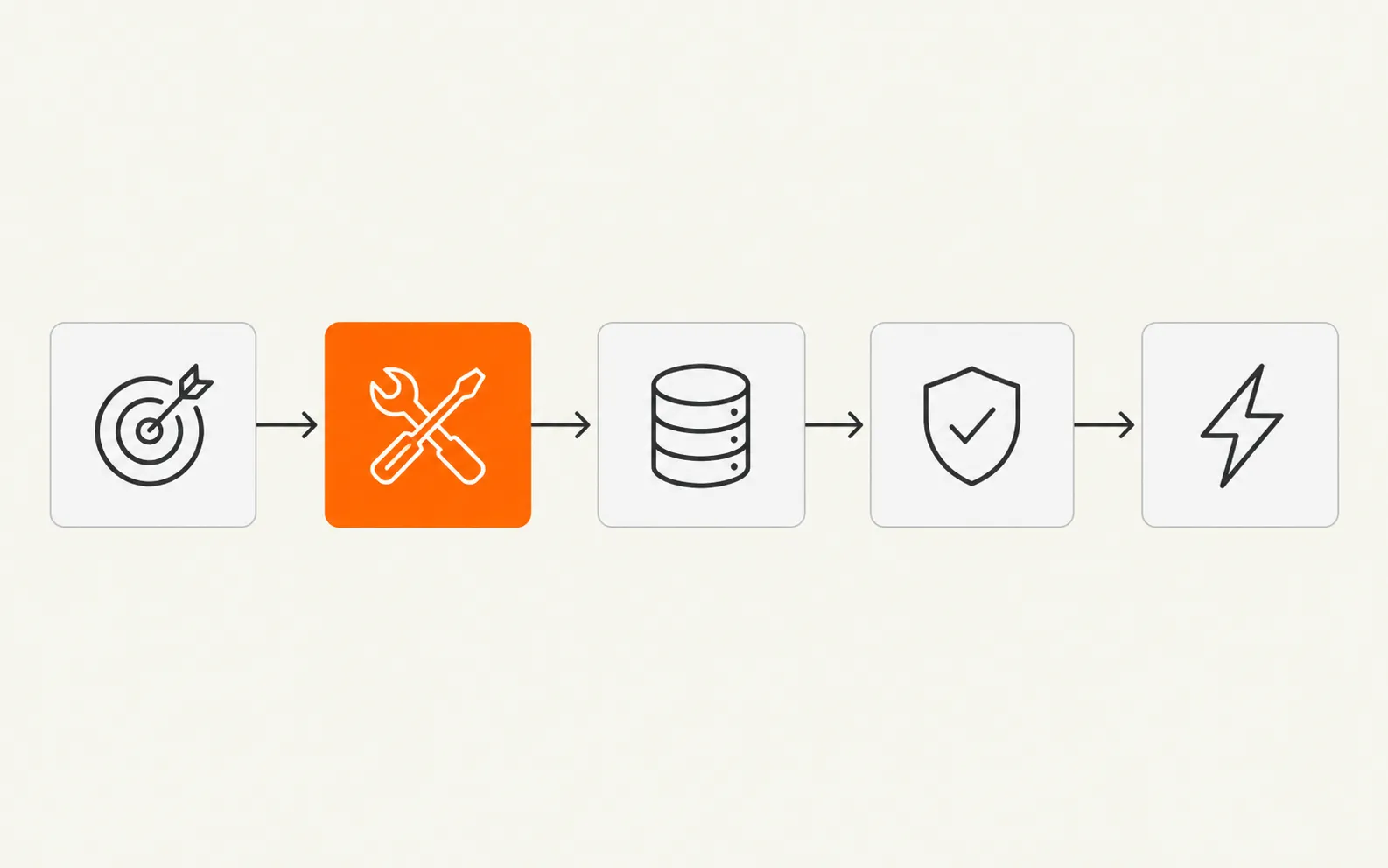
What separates a prototype from a real agent?
A production-ready AI agent is not just a model with a prompt. It has a clear business objective, tool access, retrieval strategy, workflow logic, and comprehensive error handling.
The best implementations are designed around risk, process boundaries, and human oversight. They know when to act autonomously and when to pause for approval.
- Clear scope: Define the exact task, trigger, and output parameters.
- Tool access: Give the agent safe, audited interfaces to external APIs.
- State and memory: Maintain context across sessions and interactions.
- Human in the loop: Escalate low-confidence or high-risk actions to operators.
Core architectural principles
To build systems that operate reliably in production, engineering teams must establish guardrails before scaling capabilities.
Agents must validate inputs, verify outputs against business schemas, and log all execution trajectories for replay and debugging.
Production agents should be tested against edge cases, deterministic benchmarks, and unexpected tool failures before deployment.
Z
Zobique Engineering Team
AI Systems Architecture
🧡 The Zobique Labs Team